 Whalesbook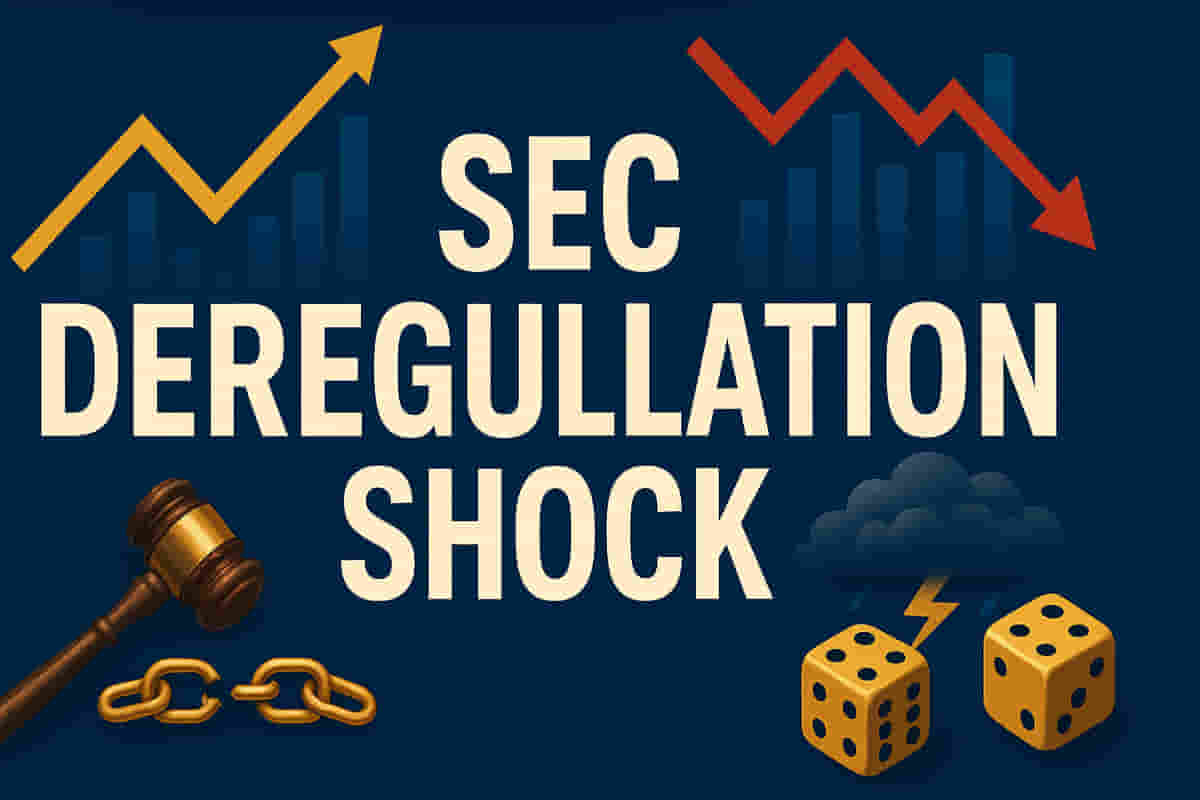
The United States Securities and Exchange Commission (SEC) is adopting a new, significantly lighter regulatory stance, signaling a major shift in how Wall Street will be overseen.
A New Era of Laissez-Faire Regulation
- The new SEC Chair has stated the commission should not hinder market innovation and has pledged to let financial markets "breathe" again, indicating a move towards deregulation.
- This new approach involves discarding numerous rules proposed by the previous administration, halting investigations into cryptocurrency platforms, and rescinding a rule that required disclosure of large, risky derivative bets – similar instruments that contributed to the 2008 global economic meltdown.
- The SEC is also proposing to ease reporting requirements for public companies, operating under the belief that corporate America can effectively self-regulate.
Historical Echoes of Deregulation
- The article draws parallels between the current trend and past periods of deregulation in the U.S. that led to significant financial crises.
- Examples cited include the Supreme Court's "Marquette vs First of Omaha" ruling in 1978 which allowed nationwide interest rate exports by banks, the Depository Institutions Deregulation and Monetary Control Act of the 1980s, and the repeal of the Glass-Steagall Act by the Clinton administration in the 1990s.
- The Commodity Futures Modernization Act of 2000, which removed long-standing constraints on derivatives speculation, is also highlighted as a precursor to the 2008 financial crisis.
Risks and Concerns Raised
- Critics argue that deregulating Wall Street is akin to removing traffic rules, creating a marketplace with insufficient guardrails for ordinary investors, workers, and savers.
- The growth of financing activities outside traditional banking sectors, with U.S. and European banks exposed to trillions in non-bank financial institutions, adds systemic risk.
- Specific concerns are raised about cryptocurrency receiving a "free pass" and corporate disclosure rules being weakened.
Author's Perspective
- Krishnan Ranganathan, an investment banker and an alumnus of Harvard Business School, views the current trend not as reform but as a return to an era where loopholes were opportunities and bailouts were business models.
- He contrasts the current approach with President Franklin D. Roosevelt's "cop on Wall Street" initiative after the Great Depression, suggesting that self-policing markets tend to hide problems rather than report them.
Impact
- The shift towards light-touch regulation could lead to increased volatility and risk in financial markets, potentially impacting small investors and savers who lack robust protections.
- It may encourage speculative behavior, particularly in areas like cryptocurrency and complex derivatives, reminiscent of past financial crises.
- Impact Rating: 8
Difficult Terms Explained
- Laissez-faire: An economic philosophy advocating for minimal government intervention in the economy. Literally means "allow to do" in French.
- Derivatives: Financial contracts whose value is derived from an underlying asset, group of assets, or benchmark. They can be used for hedging or speculation.
- Subprime: Refers to loans made to borrowers with lower credit scores, who are considered a higher risk of default.
- Glass-Steagall Act: A U.S. banking law enacted in 1933 that separated commercial banking and investment banking activities, largely repealed in 1999.
- Commodity Futures Modernization Act of 2000: A U.S. federal law that explicitly exempted credit default swaps and other over-the-counter derivatives from regulation.
- Hedge Funds: Private investment funds that use pooled funds and employ different strategies to earn active returns for their investors.
- Private Credit Groups: Non-bank lenders that provide loans to companies, often those unable to secure financing from traditional banks.