 Whalesbook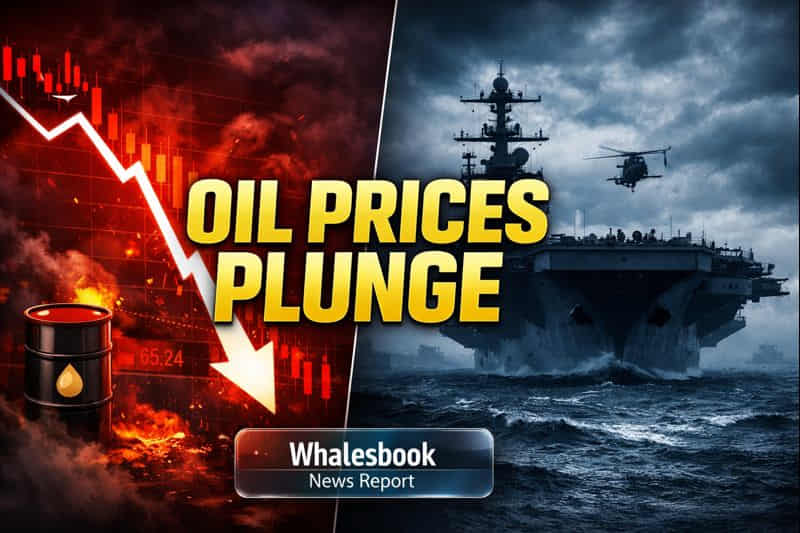
Oil Prices Plunge Amid Easing Iran Tensions
West Texas Intermediate crude settled near $59 a barrel after a steep 4.6% decline on Thursday. Brent crude futures also fell, trading below $64 a barrel. The market reacted to reports suggesting a delay in U.S. military action against Iran, a move prompted by a request from Israeli Prime Minister Benjamin Netanyahu to President Donald Trump.
Geopolitical Risk Premium Evaporates
This development significantly reduced the immediate likelihood of a U.S. response to internal protests in Iran, which had previously raised concerns about potential disruptions to oil production and shipping routes. The market had priced in a heightened risk of conflict, driving prices up earlier in the month.
Military Buildup Continues
Despite the de-escalation in planned attacks, the United States is reinforcing its military posture in the Middle East. Sources indicate at least one aircraft carrier is en route to the region, with further military assets expected to follow. This ongoing buildup signals that strategic considerations remain high, potentially influencing future market sentiment.
Broader Market Factors
The oil market is set to conclude the week with minimal change after an earlier surge attributed to fears of targeting Iran, a major oil producer. Upheaval in Venezuela and disruptions to Kazakh oil exports have also supported prices. However, the broader context remains one of sluggish demand growth outpacing output gains, a trend that led to oil's worst year since 2020.
Sanctions Pressure Continues
Separately, in the Caribbean, the U.S. is intensifying pressure on sanctioned vessels. A sixth oil tanker near Venezuela has been seized. However, Trafigura Group is proceeding with its first oil discharge from Venezuela into Curacao storage facilities, illustrating the complex dynamics of U.S. sanctions enforcement and oil marketing efforts.