

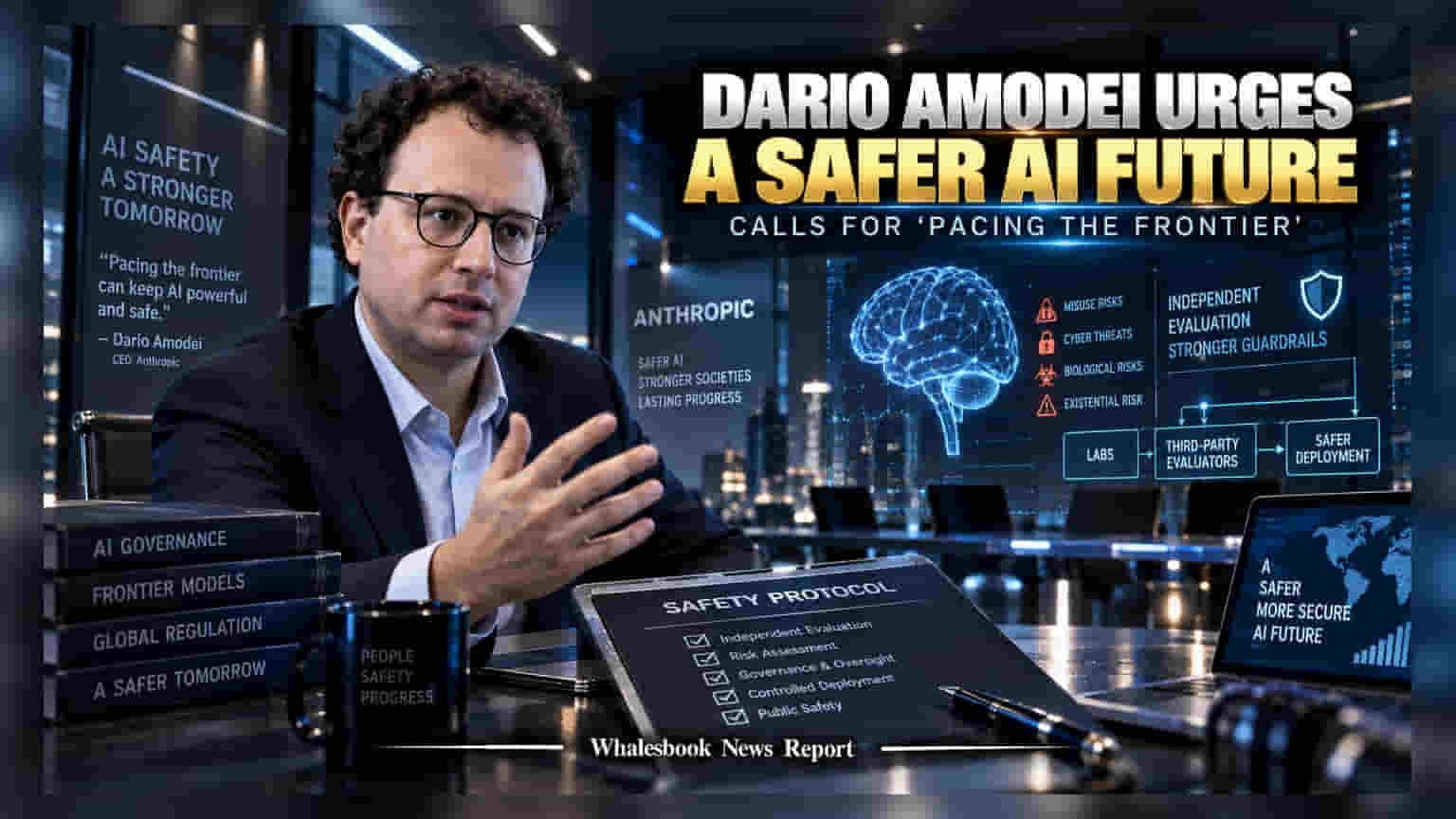
Anthropic CEO Dario Amodei has proposed a strategy to slow the pace of AI development to address safety risks, including the use of third-party auditors. While the company is growing its revenue rapidly, it remains a private firm with no public stock listing. Investors should note that the company filed for a confidential IPO earlier this year.
Anthropic CEO Dario Amodei has publicly advocated for a systemic shift in how frontier artificial intelligence laboratories manage their development cycles. In a proposal released on September 12, 2026, Amodei called for the industry to adopt a "pacing the frontier" framework. This strategy prioritizes safety by embedding independent, third-party evaluators directly into corporate workflows to monitor development, rather than relying solely on internal safety checks.
This shift comes as the technology sector grapples with the accelerating capabilities of AI models. Anthropic’s proposal suggests that by slowing the race for rapid capability, firms can better manage existential risks and security vulnerabilities, such as the potential for AI to be misused in cyberattacks or biological weapon development. Amodei is urging governments to formalize these safety standards into law, arguing that a unified approach is necessary to maintain technological superiority while ensuring public safety.
For investors monitoring the AI landscape, it is important to clarify that Anthropic is a private company and is not currently listed on any public exchange, such as the NSE or BSE. While the company filed paperwork for a confidential IPO with the US Securities and Exchange Commission in June 2026, it does not have a public share price or ticker symbol. Any claims suggesting otherwise are incorrect.
From a financial perspective, Anthropic is operating in a capital-intensive environment. As of July 2026, reports indicate the company had reached an annual revenue run rate of $65 billion. However, this growth comes with significant costs. Building and training frontier AI models requires massive investments in computing infrastructure and high-end semiconductor chips, which creates ongoing pressure on profit margins and cash flow. Managing these costs while balancing the need for safety remains a central operational challenge for the company.
The proposal has drawn mixed reactions regarding the concept of regulatory capture. Critics argue that establishing stringent, legally mandated safety frameworks can create high compliance hurdles. Such barriers may make it difficult for smaller, less-capitalized startups to enter the market, potentially shielding larger, well-funded companies like Anthropic from competition. Amodei maintains that these measures are essential for the long-term sustainability of the technology and are not intended to stifle innovation.
Investors looking at the broader AI sector should monitor how global regulators respond to these calls for standardized safety. The next key event for followers of the company will be further updates regarding its confidential IPO process and how the firm navigates the tension between maintaining its competitive edge and adhering to the safety-first development cycle proposed by its leadership.